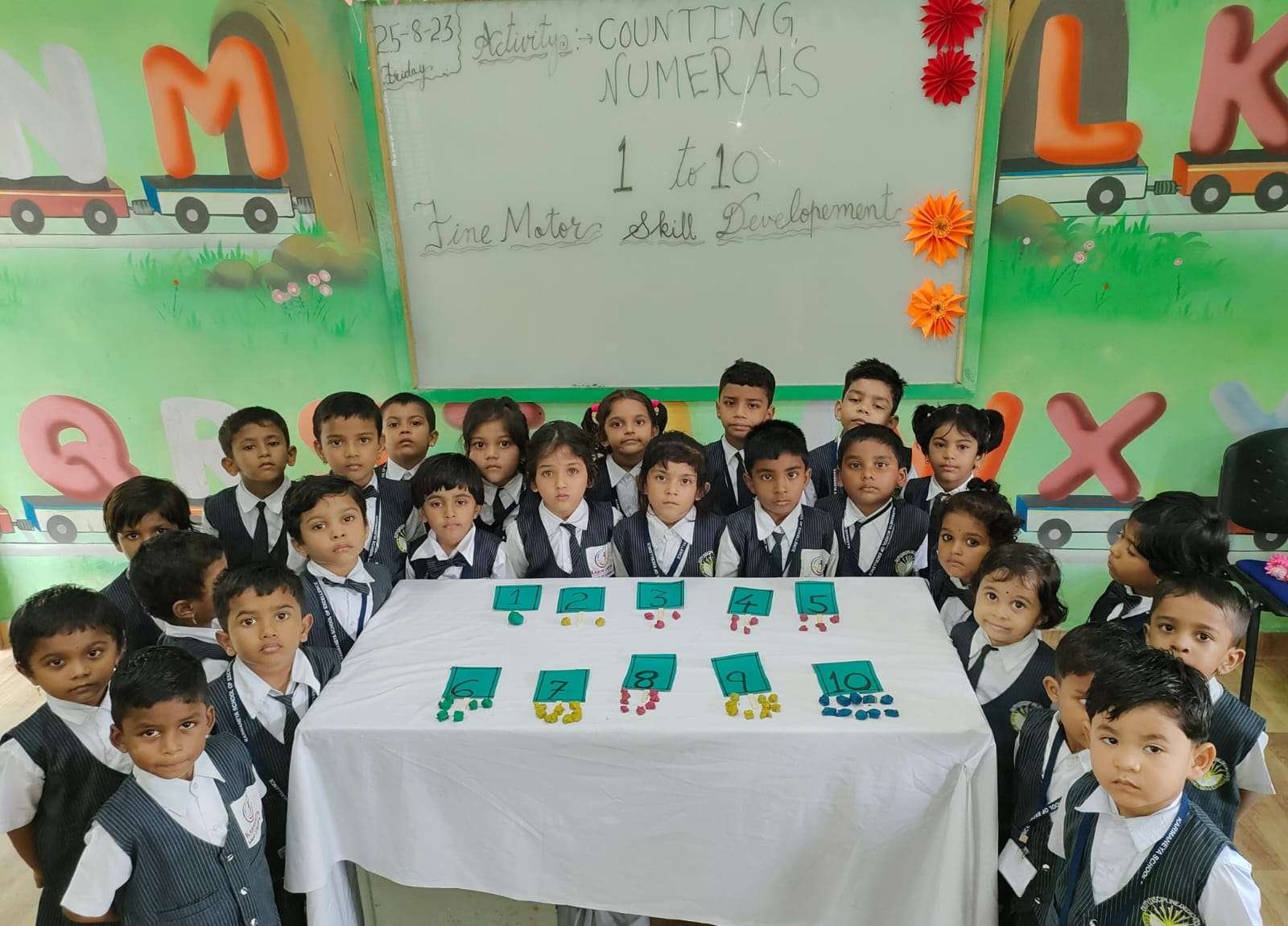
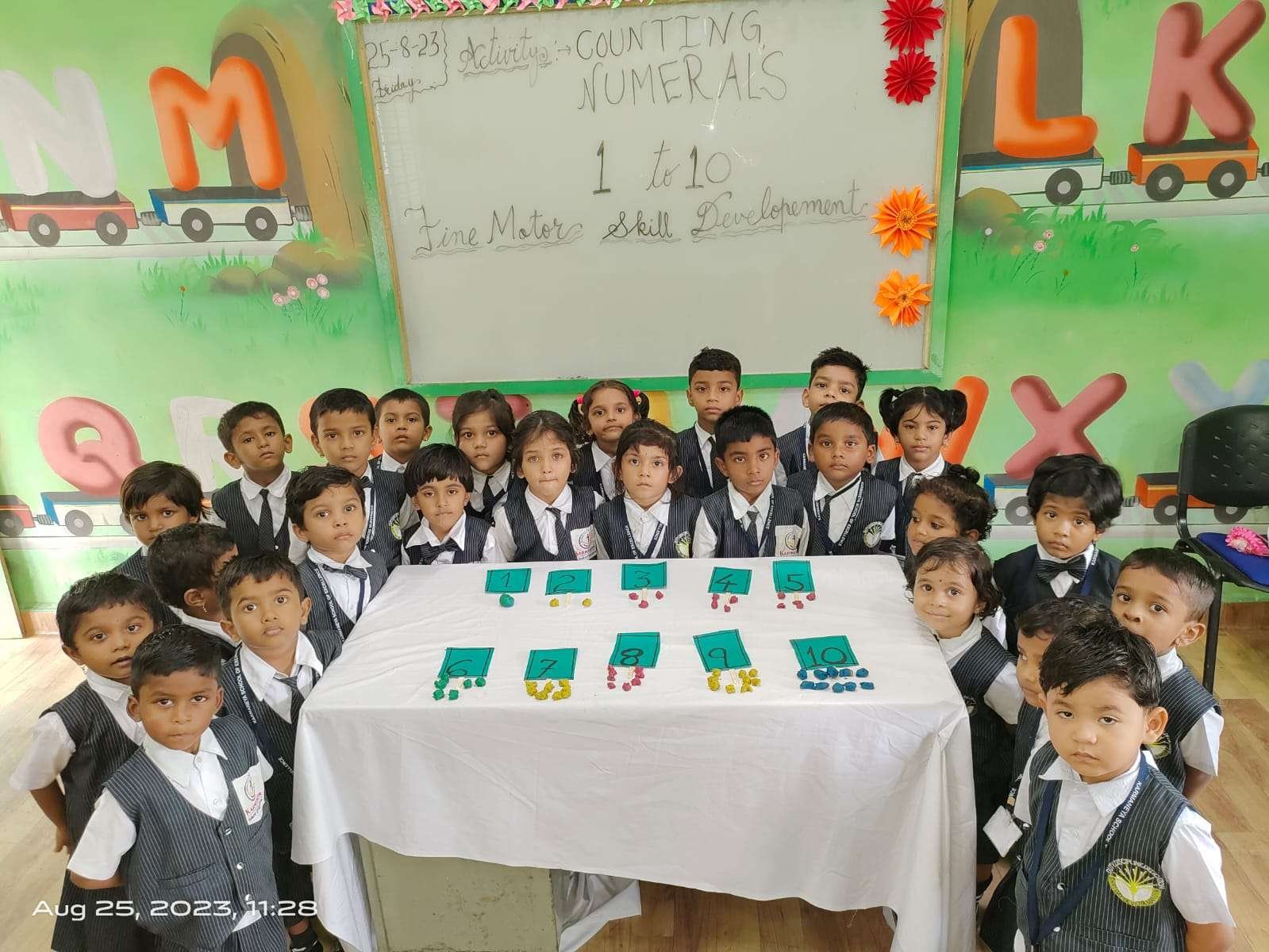
*Class Activity: Counting from 1 to 10 using Clay*
*Class:* KG I / KG II
*Date:* 25/8/23
*Objective:*
The main objective of this engaging activity is to introduce KG I and KG II students to the world of numbers by counting from 1 to 10 using clay. By employing a hands-on approach, the activity aims to foster a solid understanding of numbers, boost cognitive skills, enhance logical thinking and reasoning, develop fine motor skills, and strengthen their grasp of number-value relationships.
*Introduction:*
Numbers are an integral part of our daily lives, and understanding them is crucial. Counting numbers, also known as natural numbers, are the foundation of mathematics, used for counting objects and quantities.
*Activity:*
In this creative and interactive activity, students will utilize clay to count from 1 to 10. Each student will receive a small portion of clay. The teacher will start by demonstrating how to mold the clay into individual numerals from 1 to 10. As they shape the clay into numbers, students will verbally count along, reinforcing the association between the numeral and its quantity.
*Procedure:*
1. Distribute a small amount of clay to each student.
2. Begin with the number 1. Show students how to roll and shape the clay to form the numeral “1.”
3. Encourage students to repeat the number as they create it with clay.
4. Move on to the number 2, and repeat the process, counting along.
5. Continue this process up to the number 10, ensuring active participation and engagement.
*Learning Outcomes:*
Through this tactile and visual activity, students will achieve the following learning outcomes:
– *Tactile Learning:* Manipulating clay to create numbers provides a tactile learning experience that enhances memory and understanding.
– *Cognitive Skills:* Engaging in a hands-on activity stimulates cognitive development, facilitating better comprehension of numerical concepts.
– *Fine Motor Skills:* Pinching, rolling, and shaping clay improve fine motor skills, aiding in the development of dexterity.
– *Numerical Association:* Associating physical forms with numbers reinforces the connection between the symbol and its value.
– *Sequential Understanding:* Creating numbers in sequence helps students grasp the concept of numerical order and progression.
*Conclusion:*
Counting from 1 to 10 using clay transforms learning numbers into an enjoyable and interactive experience. This creative approach not only imparts numerical knowledge but also nurtures cognitive abilities, fine motor skills, and logical thinking. By combining play and learning, students are better equipped to develop a strong foundation for their future mathematical journey.